Design tokens for brands: one source for product, web and AI.
Design tokens are your brand rules written as exact, named values: colours, type, spacing, radii and motion that code and tools read directly. They are the bridge between brand guidelines and the product, the website and the AI tools your team uses. Change a value once and every surface follows. Built for CEOs, founders and marketing leads at B2B tech companies.
2 of 3 spots left in November
250+ brands in 8 yearsGoogle 4.7 (29)Upwork 4.9 (126 reviews)Proposal in 2-8 h
What brand tokens give your team.
One set of values, used by designers, developers and AI tools, instead of three versions of the same brand.
- Colours with roles, not just a palette
- A type scale the product and the site share
- Spacing, radii and grid as values
- Light and dark modes from the same tokens
- A Figma library and code that read the same file
- A machine-readable layer for AI tools, part of the Brand OS
Brand rules, design tokens, components.
| Brand rule | Design token | Component | |
|---|---|---|---|
| Example | Use one confident blue for the brand | brand-primary = one exact value | A button that uses brand-primary |
| Lives in | Guidelines | One shared file, read by tools | Figma library and product code |
| Read by | People | People, code and AI tools | Product designers and developers |
| When it changes | Someone updates a PDF | Change once, every surface follows | Inherits the token change |
The brand layers worth turning into tokens.
Not just colour. The point is that your website, product and AI tools all pull from the same values. That is the base of every Brand OS I build. The token files themselves stay with clients.
- Colour with roles: brand, surface, text, data, states
- Type: families, sizes, weights and line heights
- Spacing, radii and grid
- Motion: durations and easing
- Logo rules: clear space and minimum size as values
- Voice: approved terms, banned words and facts, in the same structured form
Tokens are how AI tools stay on-brand.
A PDF says “use our blue generously”. A tool cannot do anything with that. A token says exactly which blue, where it goes and where it never goes. Product teams have known this for years. The new part is that Claude, ChatGPT and design tools now build slides, pages and posts too, and they follow exact values far better than adjectives.
So the brand I draw by hand ends with a layer machines can read: tokens for the visual side, rules and facts for the words. More on a design system for Claude and guidelines vs a Brand OS.
Brands where colour has a job.
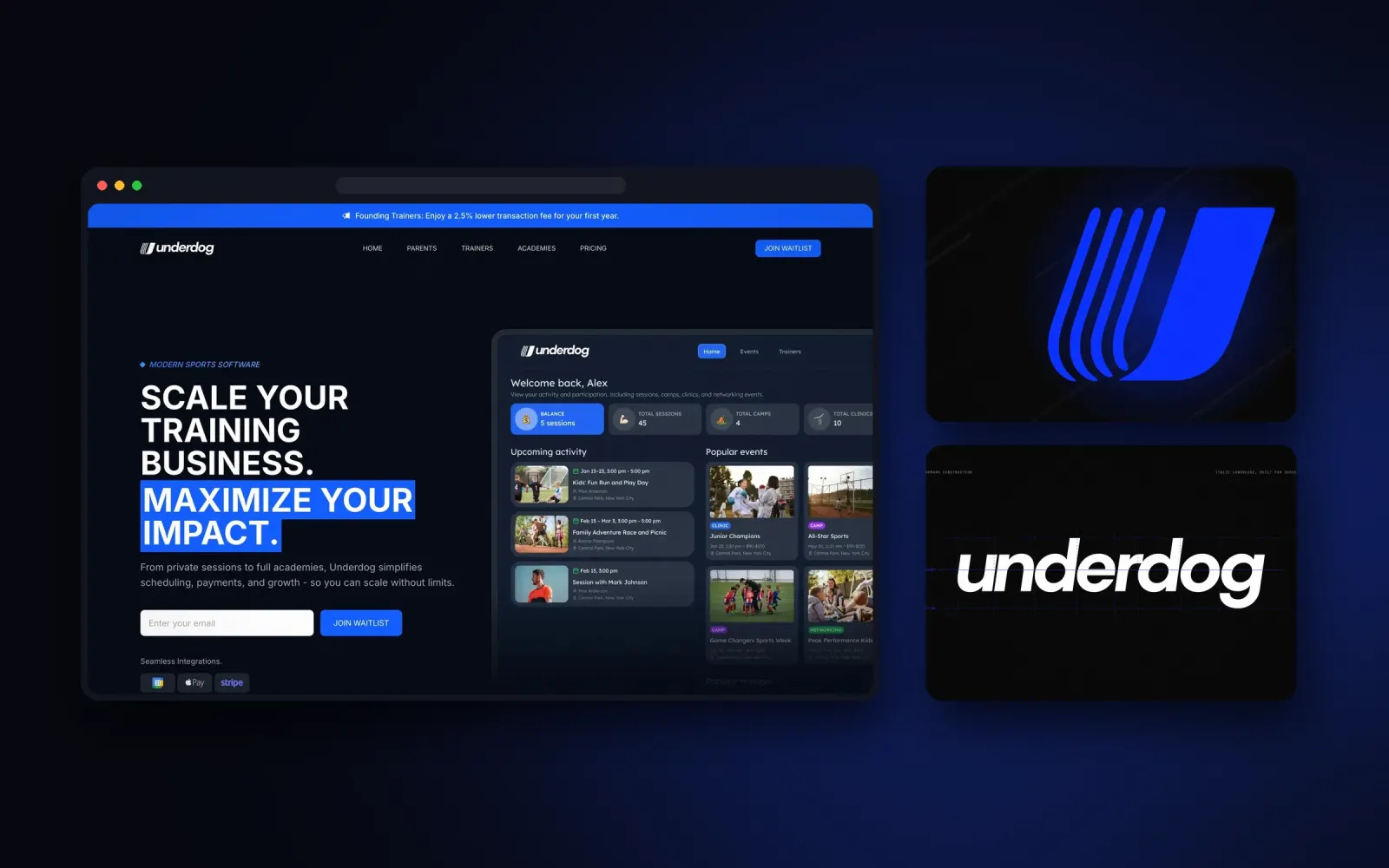
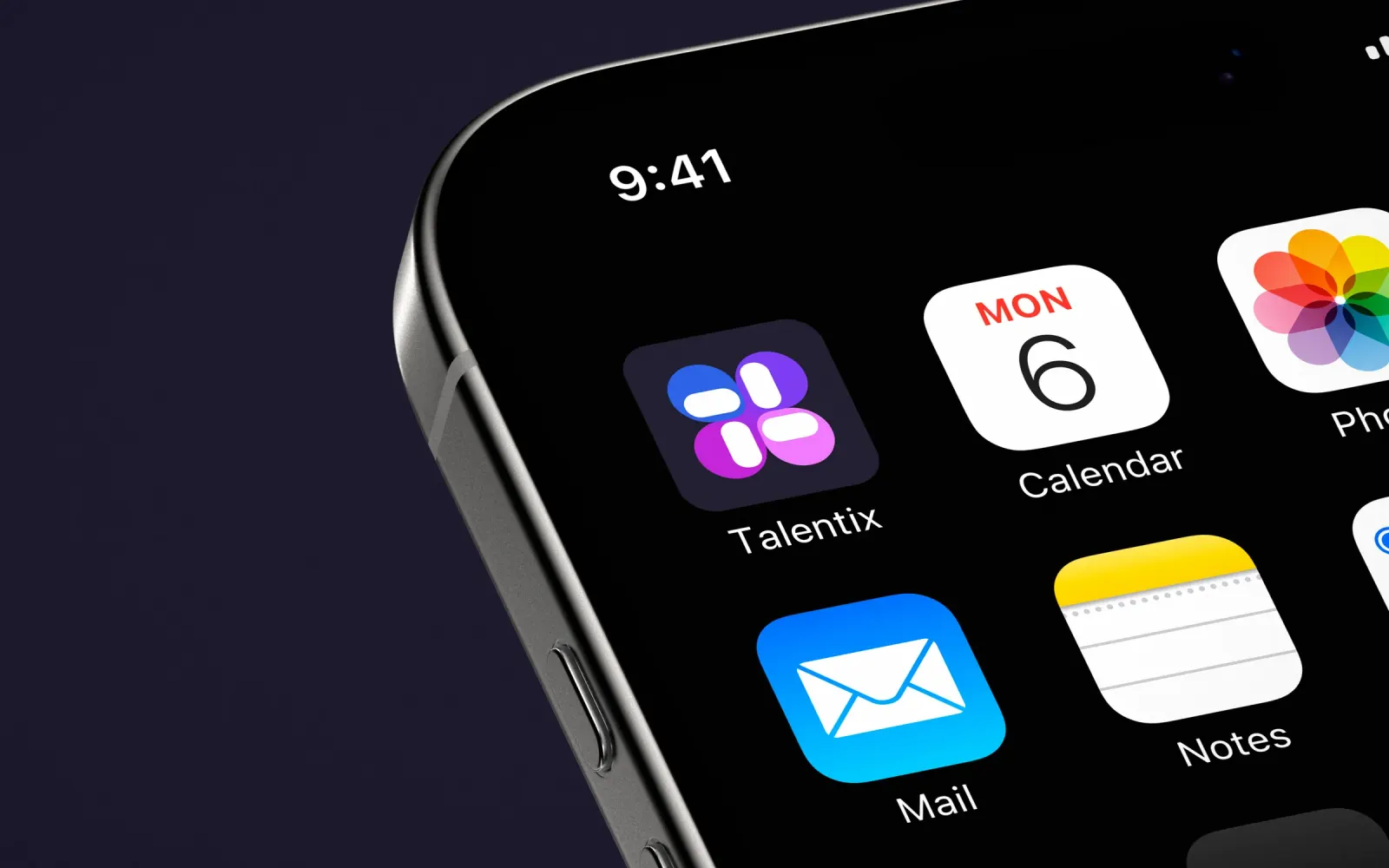
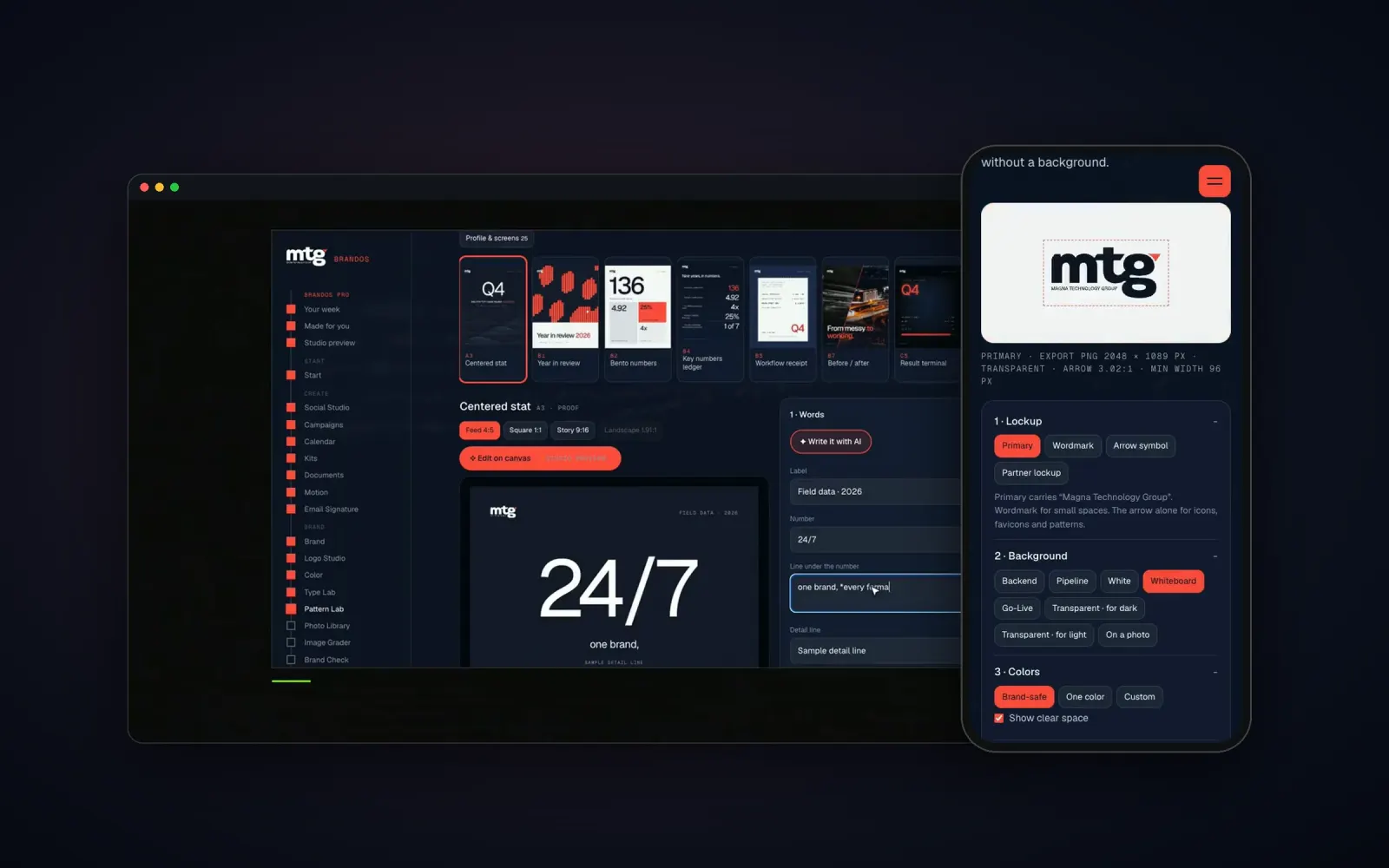
Underdog keeps one electric blue for the brand and a separate sports palette only for data. Talentix gives each of four AI modules its own colour. MTG's team makes posts from one shared system.
From brand to tokens.
Built at the end of the identity, not as a separate project.
Draw the brand
Mark, colour and type, by hand and tested at every size.
Give values roles
Brand, surface, text, data, states: each colour gets a job.
Name and export
One token set for Figma, the site and the product.
Connect
The same values feed the Brand OS Portal and the AI layer.
Tell me about your brand. Get a plan in a minute.
Three taps, then my plan for you: the package, the days and what you get. If it fits, I write a fixed-price proposal in 2-8 hours. One field at the end, email or WhatsApp. Nothing is binding.
Free first step: AI Mirror shows what ChatGPT says about your company today, and the AI-Ready Check scores your brand in 2 minutes.

A palette in a PDF, next to tokens with roles.
| Palette in a PDF | Tokens with roles | |
|---|---|---|
| Developer | Picks colours from a screenshot | Imports one file |
| Dark mode | Improvised | Defined |
| Charts and data | Brand colour everywhere | A palette reserved for data |
| AI tools | Guess the colours | Use exact values |
Not right? Full refund.
You see the strategy and the first design direction before anything else gets built. If it doesn’t feel like your company, tell me within 24-48 hours and you get back everything you paid.
- Full refund if the first direction isn’t right
- Every file and key is yours from day one
- Fixed price, nothing added unless you ask
Written into every proposal.
Straight answers.
ChatGPT is a trademark of OpenAI, Claude of Anthropic. Vizura Studio is an independent studio, not affiliated with either.
What are design tokens?
Named values for brand decisions, like brand-primary or space-4, stored in one file that design tools, code and AI tools read.
Do I need tokens if I do not have a product team?
If you have a website and use AI tools for content, yes. Tokens keep the site, slides and posts on the same values.
Are tokens part of the brand guidelines?
They should be. Guidelines explain the why, tokens carry the exact values. See what to include in brand guidelines.
Can I get your token files or templates?
No, they are built for each client. I explain the method openly. The Brand OS Portal is where clients use them.
How do tokens help with ChatGPT and Claude?
They give AI tools exact values instead of adjectives, so generated slides and pages match. More in a design system for Claude.
Want one brand your product, site and AI all read? Tell me in a minute.
Proposal in 2-8 hours. Or 15 minutes on a call, and if it's not a fit, I'll tell you.