Journal / Brand systems
PDF brand guidelines vs a Brand OS Portal
A PDF brand book was the right tool when designers made everything. Today half of what a company publishes starts in ChatGPT. That changes what brand guidelines have to be.

 Vedran ObradovićFounder & Branding Specialist - 2026-10-19 - 5 min
What a PDF does well
A PDF is a clear, fixed record of the identity: the logo, the colours, the type, the rules. For a designer who reads it once and builds from it, it works. I still deliver one.
Where it breaks
- Nobody opens it. The sales team, the founder writing LinkedIn posts and the AI tools they use never read page 34.
- It goes out of date. The product changes, the PDF stays as it was the day it was exported.
- AI cannot follow it. ChatGPT and Claude guess your tone, your claims and your numbers unless they get the brand as context.
For Deepsea Networks, before the brand system, 8 of 16 AI answers broke a hard rule, one of them a 99.9% uptime guarantee nobody had approved. After I set it up: zero invented claims in 26 answers (my own test, October 2026).
What a Brand OS Portal does differently
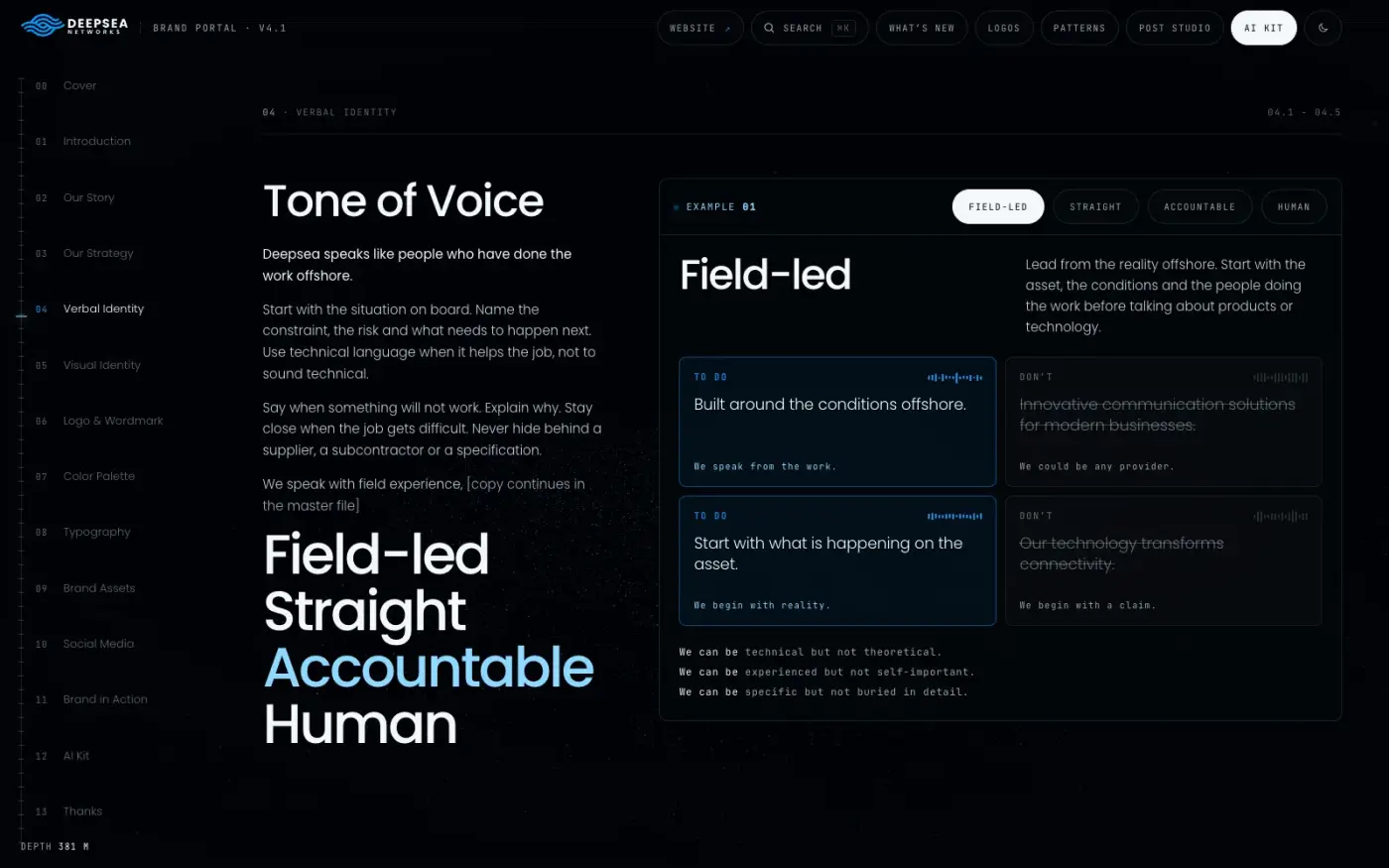
- One private link where the team finds the logo files, templates, guidelines and examples.
- An AI Kit: the context your team pastes into ChatGPT, Claude or Cursor, so drafts come back in your voice.
- Rules for facts and promises: what AI may say about you, and what it may never claim.
- Studios to make things: posts, decks and documents on brand, without waiting on a designer.
When a PDF is still enough
If one designer or agency produces everything and your team never writes with AI, a PDF does the job. Once more than a few people and their AI tools touch the brand every week, it drifts without one live place to check against.
I build the Brand OS Portal inside Brand System and Full Launch, or on top of the brand you already have. See Brand OS Portal, or run the free AI-Ready Check first.