 Hrvatski
Layer 1
Looks
Logo version and size, clear space, colours, fonts, photo style, templates.
Brand compliance is not about policing people. It is about making the right way the easy way.
Brand compliance means that everything your company puts out follows your brand rules: the right logo, colours, fonts, voice and facts. It covers your team, partners, agencies and now AI tools too.
The best way to enforce brand guidelines is not more checking. It is making on-brand work easier than off-brand work: locked templates, one link for files, short rules, approved facts, and a light check on what matters most.
 By Vedran Obradović · Updated 5 November 2026
Three layers. Most teams only check the first.
Layer 1
Logo version and size, clear space, colours, fonts, photo style, templates.
Layer 2
Voice, names, words you never use, how you describe what you do.
Layer 3
Numbers, results, client names and promises. Only what is approved and true.
Layer 3 is the one that can hurt you. A wrong logo looks bad. A wrong claim can lose a deal. Keep a list of approved facts, like my own facts page.
It is almost never bad will. It is friction.
Every line above is a missing tool, not a lazy person. Fix the tool and compliance goes up by itself. Remote teams feel this most, see brand consistency for remote teams.
Free tool
Compliance starts with a clear brand. Answer a few short questions. You get your brand score and the first thing to fix. It is free.
Way 1
Files, rules and templates in one place. No copies in inboxes. See brand hub.
Way 2
Logo, colours and fonts fixed. People change words and photos only. See brand templates for teams.
Way 3
One right and one wrong example per rule. People copy what they see.
Way 4
What anyone may say, and what nobody may promise.
Way 5
Load voice and facts into ChatGPT, Claude and other tools. See brand guidelines for AI agents.
Way 6
Most work needs no check. Big claims and new layouts get one look.
Way 7
Ten minutes on day one beats ten fixes later. See brand onboarding.
When the tools are right, people stop asking. Jeremy Murray from KORDIN said it in one line: "Our team just uses them without asking questions."
Leave your email. I design them by hand and send them to you within 48 hours. It costs you nothing.
I write to you from [email protected]. If you do not see it, check spam.
Use it for work that needs a check. Two minutes per piece.
BRAND COMPLIANCE REVIEW
Piece: [name/link]   Made by: [name]   Checked by: [name]   Date: [date]

LOOKS
[ ] Made from a current template (or new layout approved)
[ ] Logo: right version, right size, clear space kept
[ ] Brand colours and fonts, nothing else
[ ] Photo is approved and we may use it

WORDS
[ ] Sounds like us (clear, short, no words from the never list)
[ ] Company and product names written the right way

FACTS
[ ] Every number and claim is on the approved facts list
[ ] No client name without their OK
[ ] No promise we cannot keep

RESULT
[ ] OK to go   [ ] Fix and send back: [one line on what to fix]
Keep the "fix" note to one line and add the fix to the rules, so it does not happen again. The full yearly check is in the brand audit checklist.
Check by risk, not by habit. Otherwise checks become the bottleneck.
| Piece | Risk | Check |
|---|---|---|
| Post from a locked template | Low | No check, the template does the work |
| Email signature, LinkedIn banner | Low | No check, made from the tool |
| New slide deck or one-pager | Medium | One look from the brand owner |
| Numbers, results, client names | High | Check against the approved facts list |
| New layout or new channel | High | Brand owner approves before it ships |
| Partner co-branded piece | High | Both sides approve, see co-branding guidelines |
Who owns the brand and decides? That is governance, covered in brand governance for startups.
AI drafts are now a big part of what goes out. They need the same rules.
Read ChatGPT brand guidelines for the setup, or see how Brand OS Portal keeps people and AI on the same rules.
Try one Brand OS Portal tool
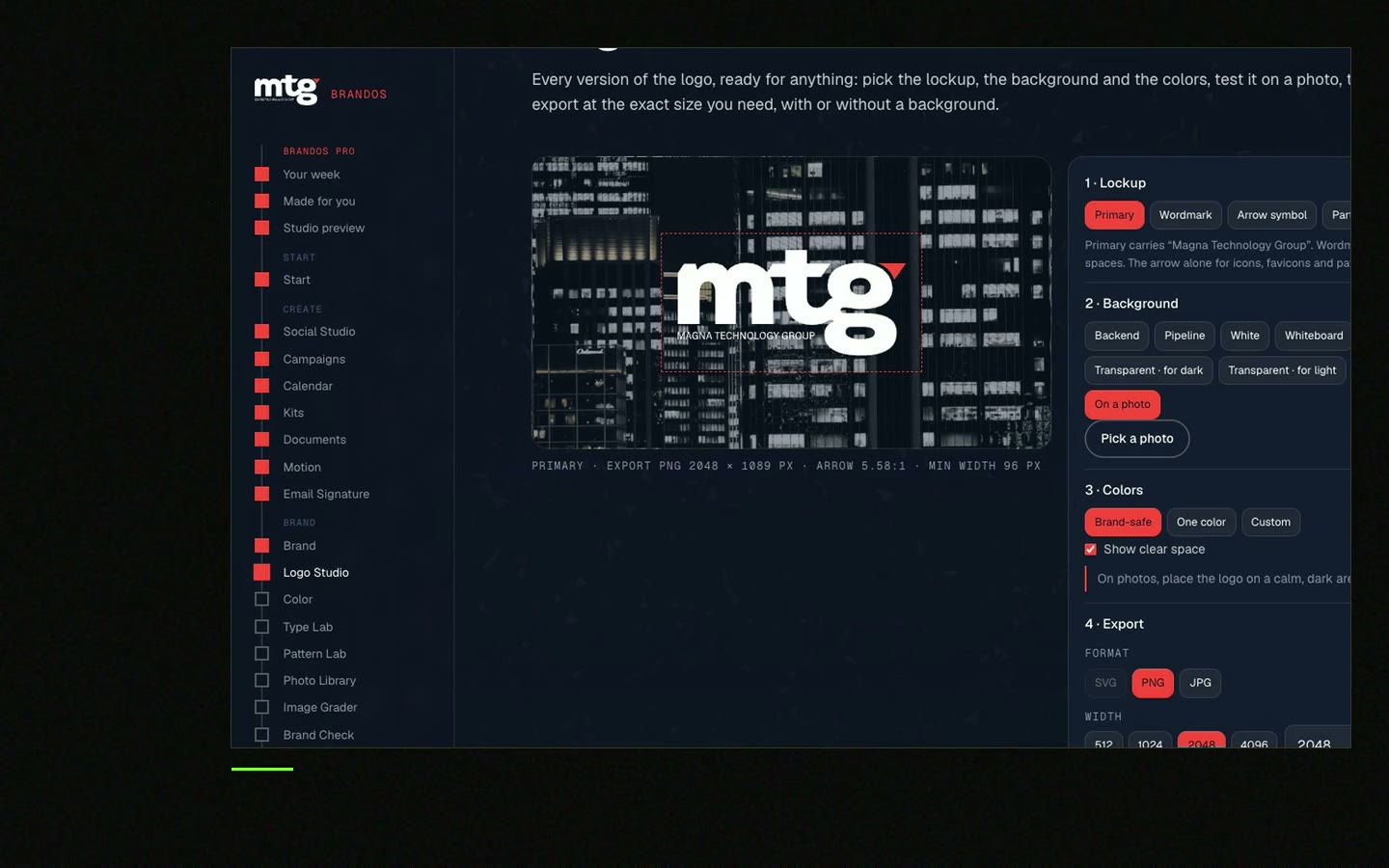
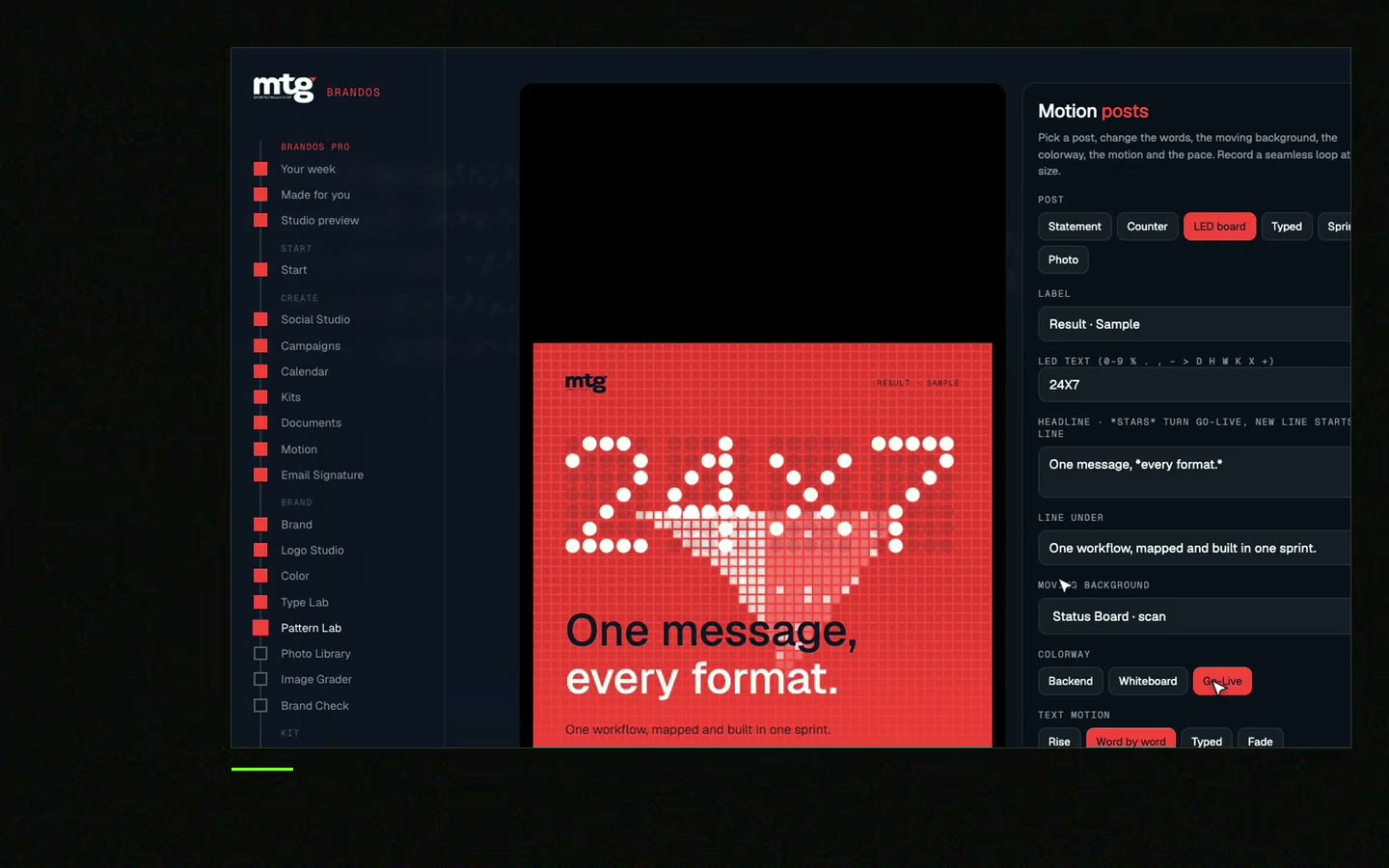
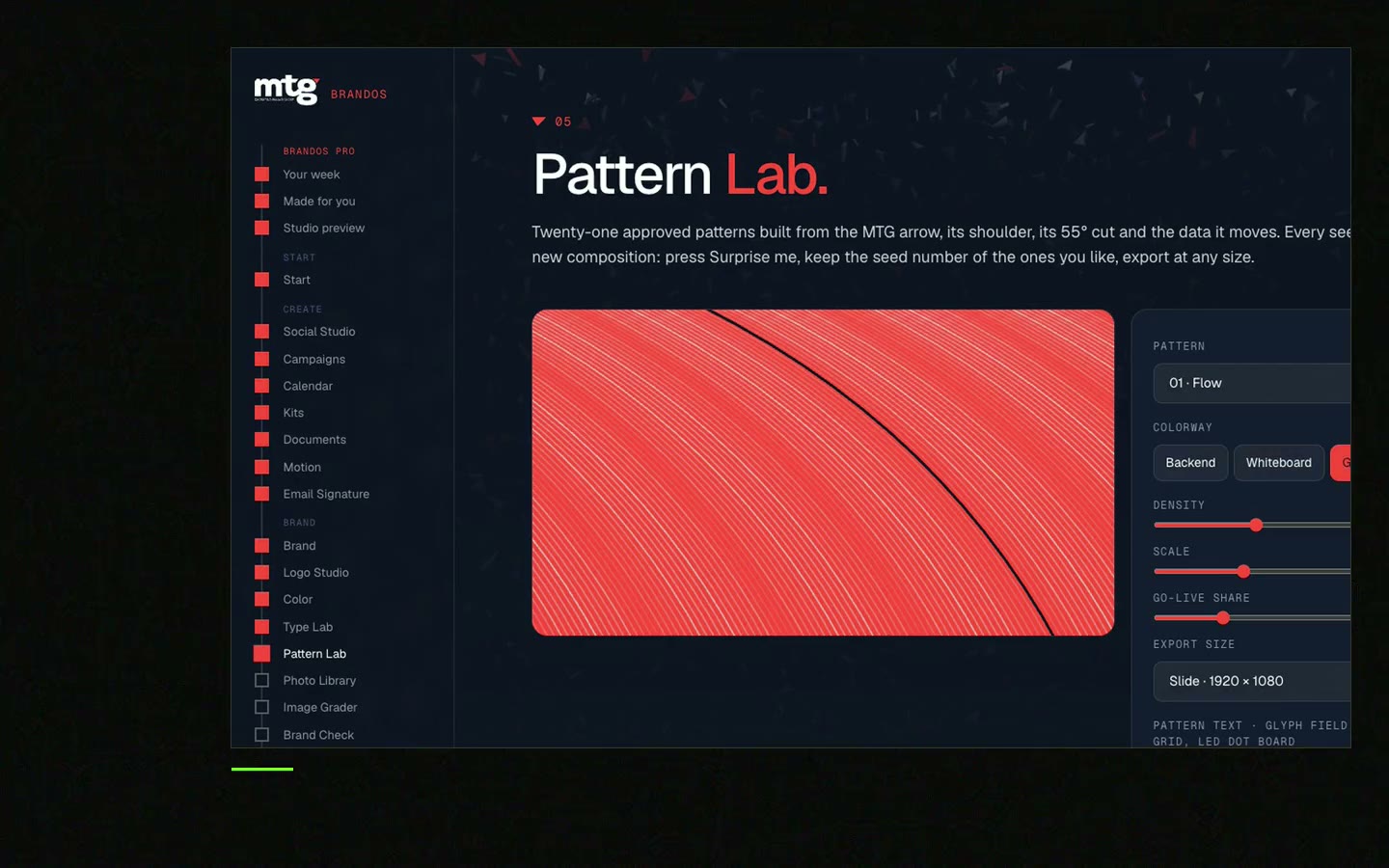
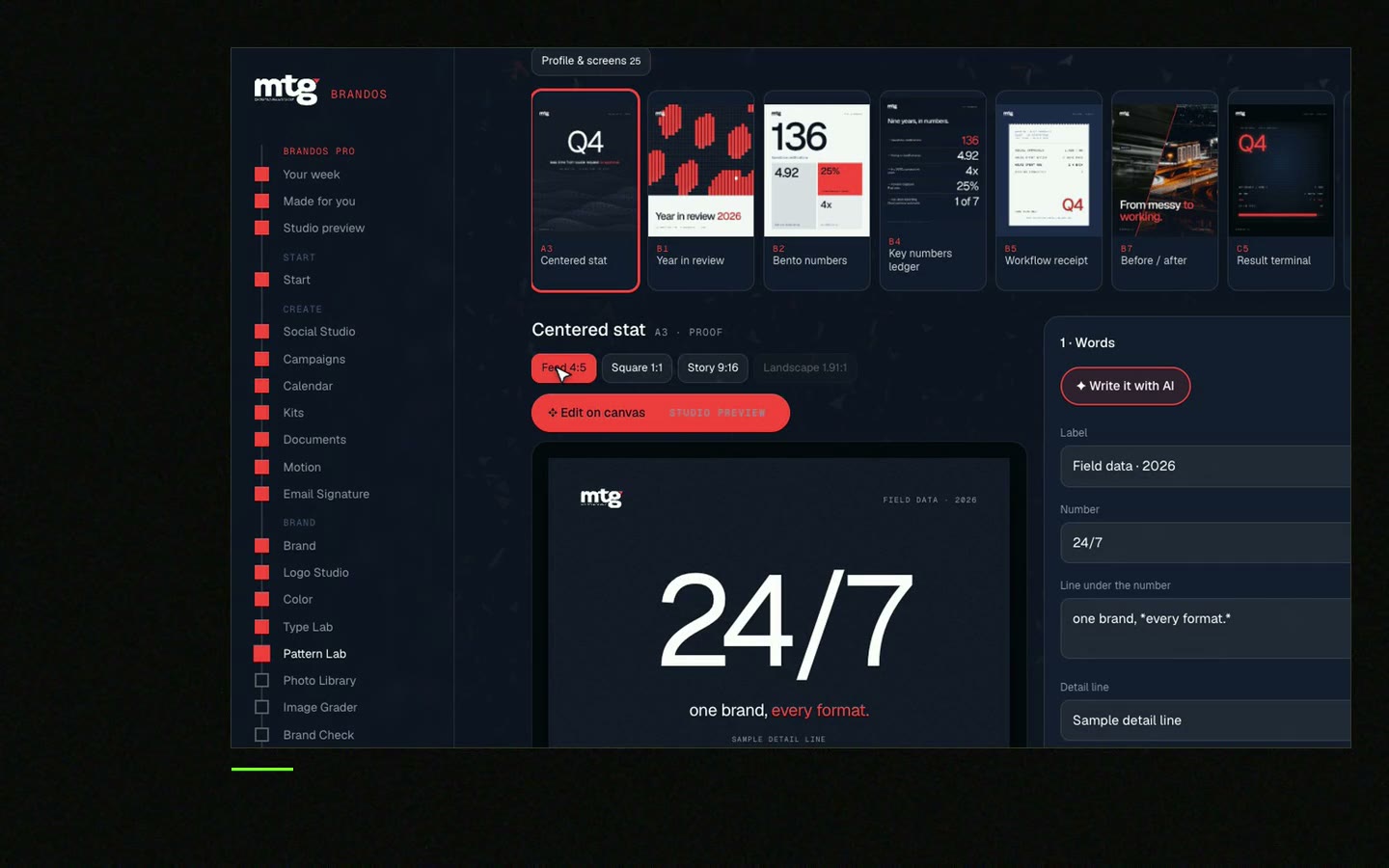
This is a real tool from a real Brand OS Portal, on the MTG brand. Change the words and the photo. You cannot break the brand.
Brand compliance means everything your company puts out follows your brand rules for looks, words and facts.
People trust what looks and sounds the same every time. And wrong claims or old logos can cost deals and trust.
Make the right way the easy way: one link, locked templates, short rules with examples, approved facts, AI loaded with the same rules, and light review by risk.
Tools that hold brand files and templates, and some that check work against the rules. A clear rule set matters more than the tool.
One brand owner, often in marketing. But everyone who makes something is part of it, so give them easy tools.
See what ChatGPT says about your company, and how to fix it.
You hear from me within 2 to 8 hours.
May I use cookies for Google Analytics and Clarity to see which pages help? Privacy