 Hrvatski
Day 1
Collect your last 20 posts
Count how many use stock backgrounds.
A stock background is quick, and so is everyone else's. A brand pattern comes from your own logo.
Free: your brand in 3 real designs, in 48 hours.
A stock background is a ready image you can find on a stock site. It is quick, but other companies use the same ones, so your posts look like theirs. A brand pattern is drawn from your own logo or identity, so it is yours.
Use stock for a one-off need or a photo. Use a brand pattern for the backgrounds you use every week, so people know it is you.
 By Vedran Obradović · Updated 7 November 2026
Both have a place. The question is which one carries your brand every week.
| Stock background | Brand pattern | |
|---|---|---|
| Who else has it | Anyone who finds it | Nobody |
| Fit to your brand | Close, never exact | Exact, drawn from your logo |
| Colours | You recolour it, or it clashes | Your brand colours from the start |
| Speed for one post | Quick | Quick, once it exists |
| Recognition over time | Low | Grows with every post |
| Good for | A one-off, a photo, a rare topic | Weekly posts, slides, banners, covers |
It is not the picture. It is the sharing.
Stock backgrounds are made to fit everyone. That is the point of stock. The same swirl, the same blue gradient, the same dotted globe shows up on many companies' posts.
Readers do not think "nice texture". They think "I have seen this". Your logo is what is left to tell you apart, and it is small. A brand pattern gives you a second signal that is big, and yours alone.
This also hurts AI-made visuals. If you ask a tool for "a modern tech background", you get the average of everyone. Read more in why AI startups look the same.
Free tool
Answer a few short questions. You get your brand score and the top thing to fix. It is free and runs right here.
I am not against stock. I use it where it fits.
For anything weekly, the pattern wins. Then check your photo rules: brand photography guidelines.
Leave your email. I design them by hand and send them to you within 48 hours. It costs you nothing.
I write to you from [email protected]. If you do not see it, check spam.
A simple plan for a small team.
Day 1
Count how many use stock backgrounds.
Day 2
Day 3
Small, medium, large. Still and moving if you can.
Day 4
Posts, slides, banners. See brand templates for teams.
Day 5
Where to use it, how loud, which colours.
Day 6 and 7
Use it on most posts for a month. Compare how it feels.
This is the question I hear most.
Founders do not want to learn design. They want posts that look good and look like them. Stock is the shortcut. A brand portal is the better one.
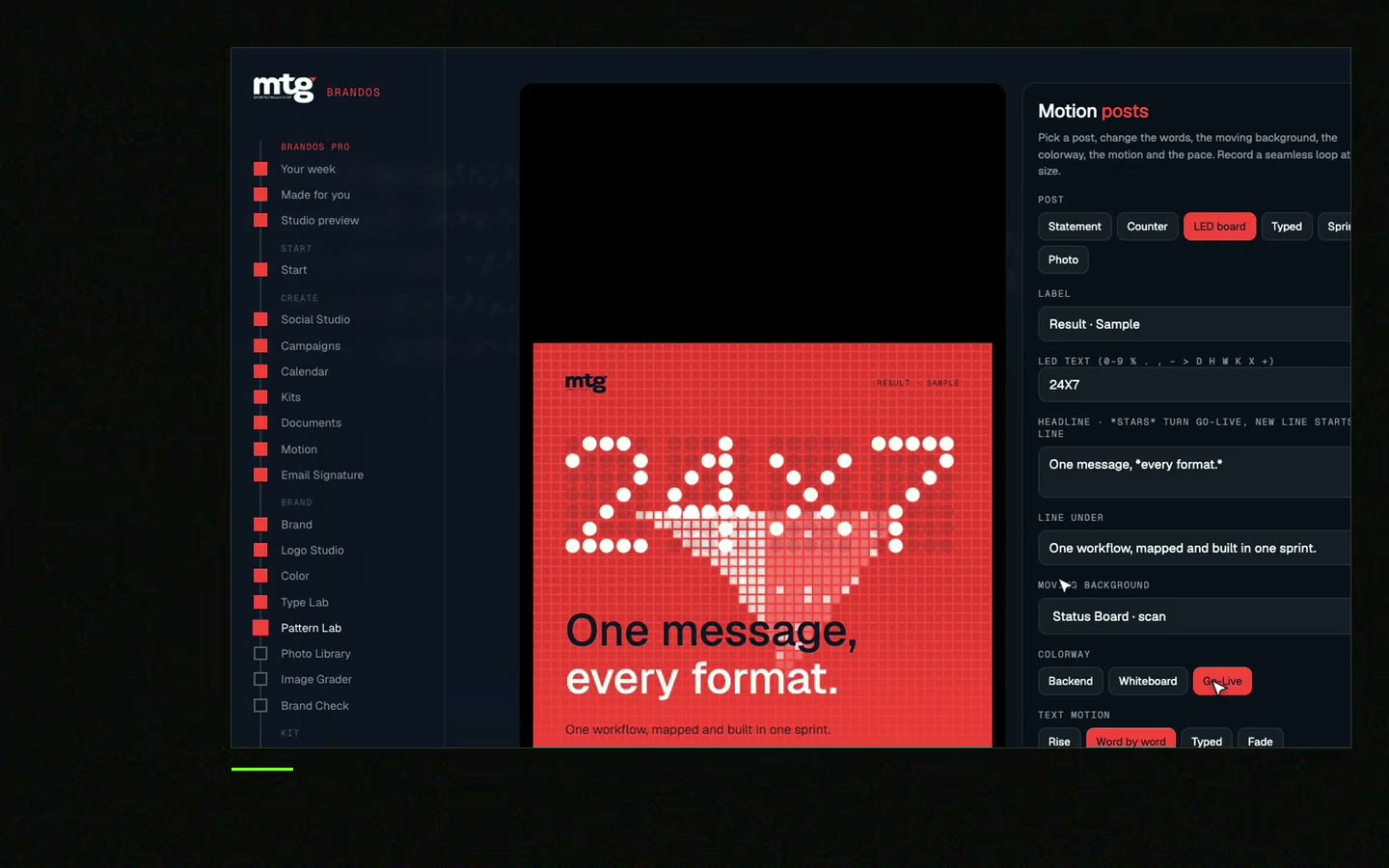
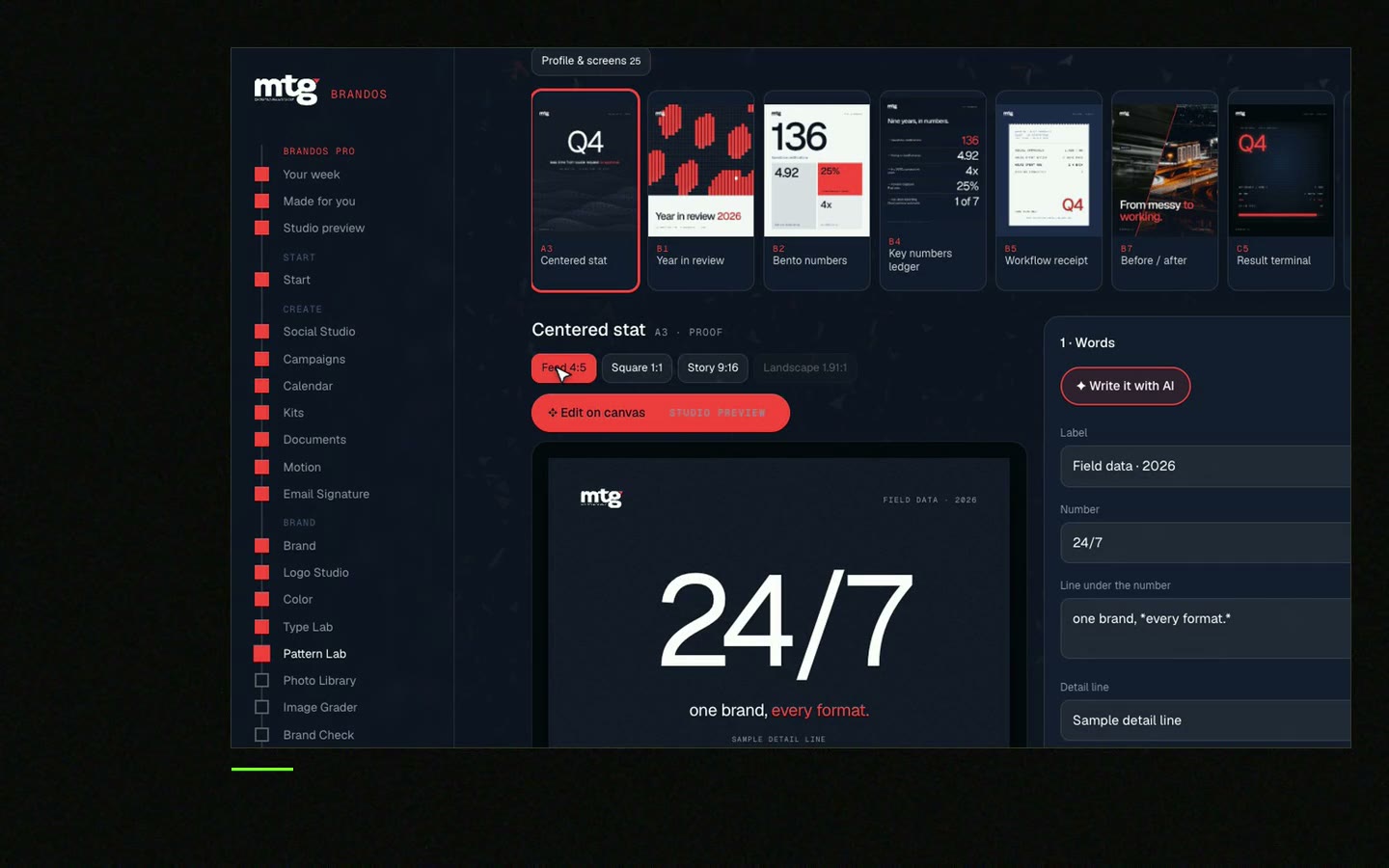
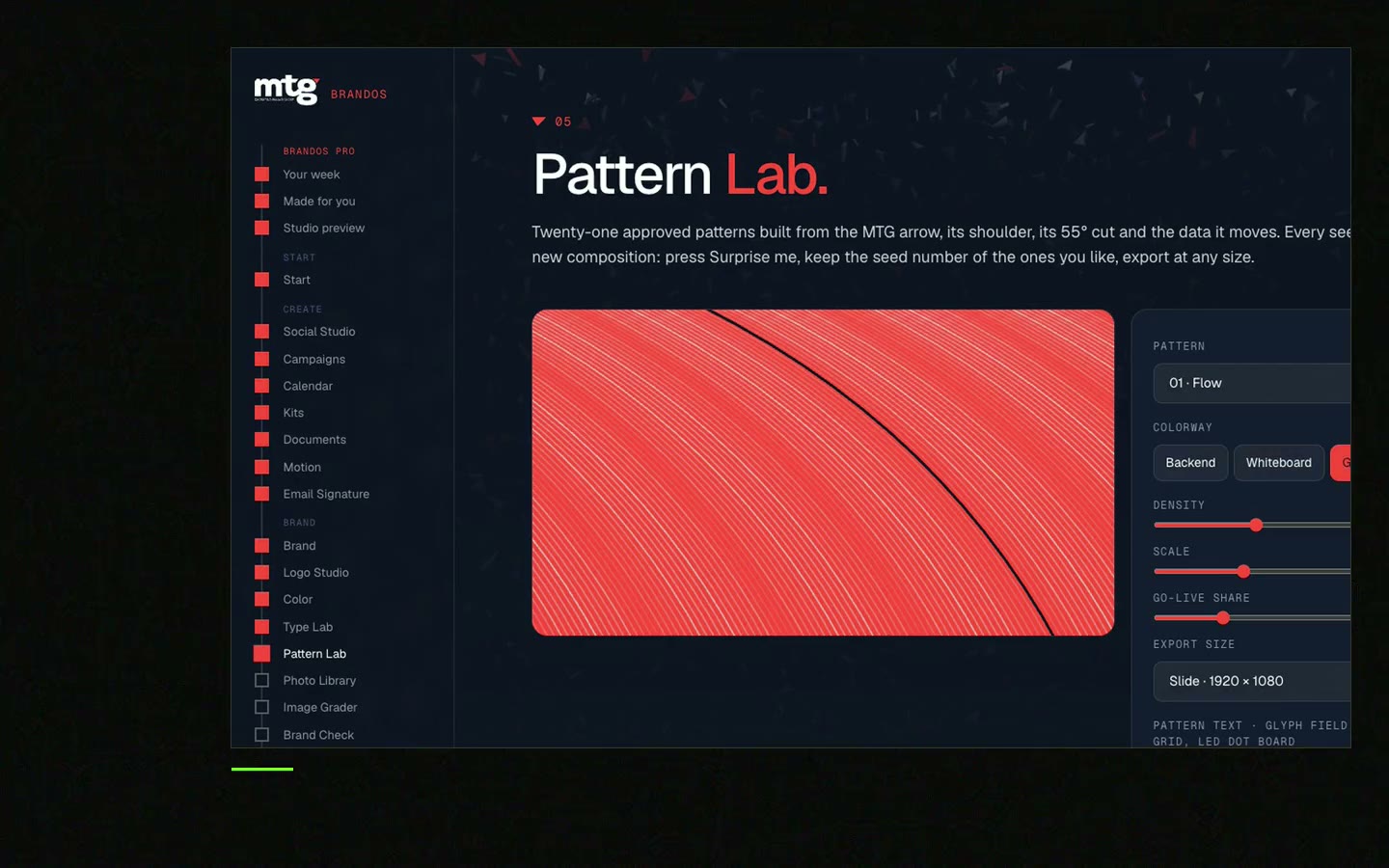
In a Brand OS Portal, Pattern Lab draws patterns from your own logo shape. You pick moving or still, colour, how many and how big. Social Studio then uses them in posts. A designer still sets up the brand, and is still the right choice for strategy and a new identity. The portal is for the daily work after that.
See Brand OS Portal.
Tick what is true today. Your ticks stay on this device.
0 of 8 done
More on where patterns go: brand patterns for backgrounds and graphic elements for brand identity.
Try one Brand OS Portal tool
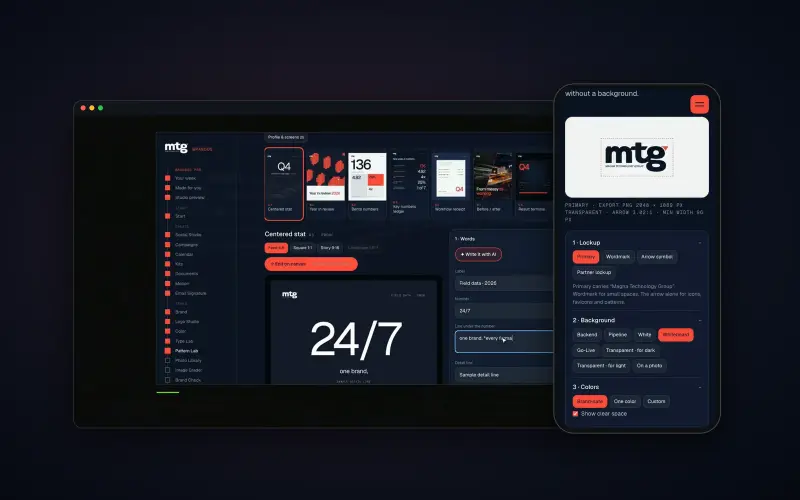
This is a real tool from a real Brand OS Portal, on the MTG brand. Pick moving or still, colour, how many and how big. The pattern comes from the brand itself and belongs to no one else.
Watch
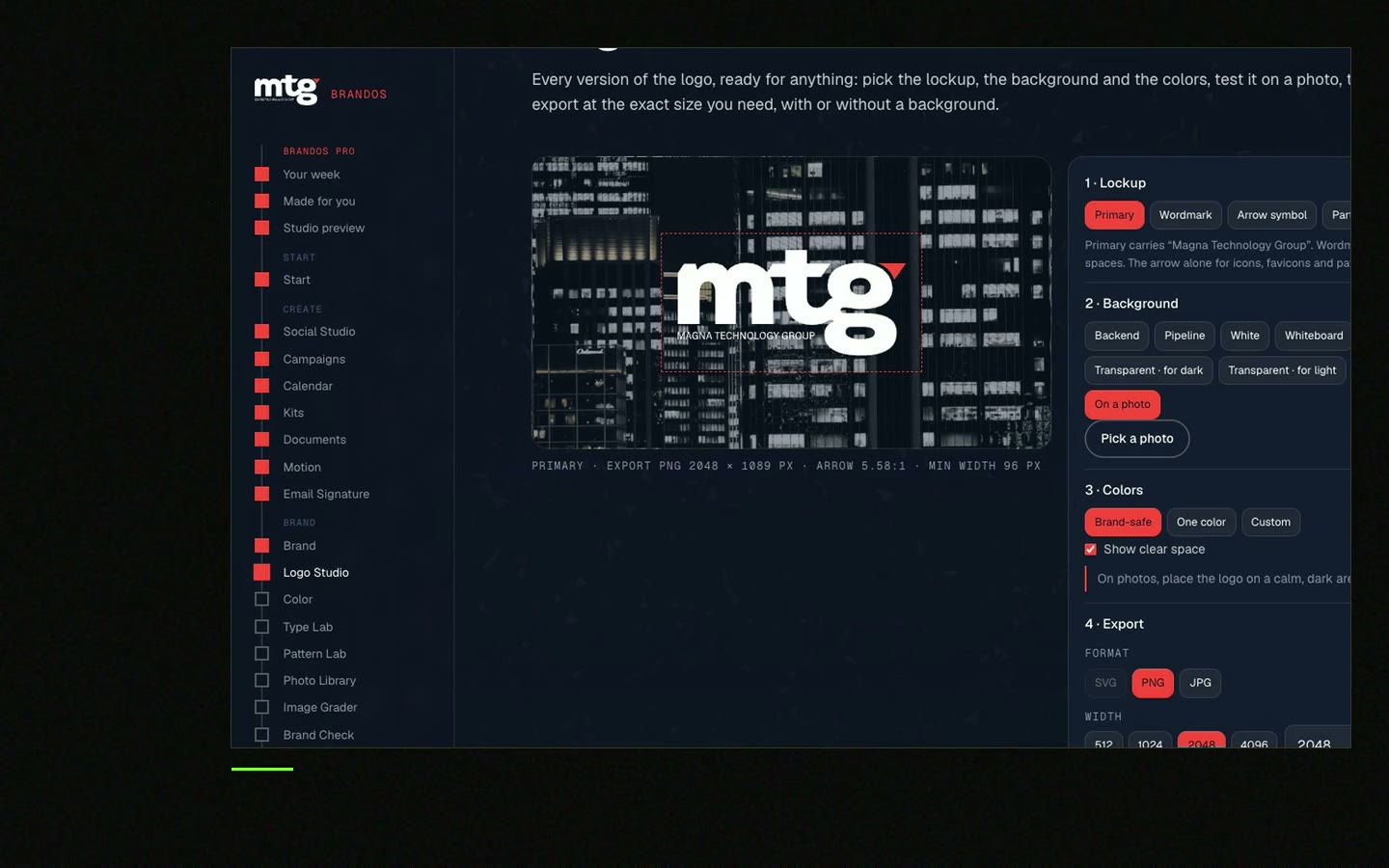
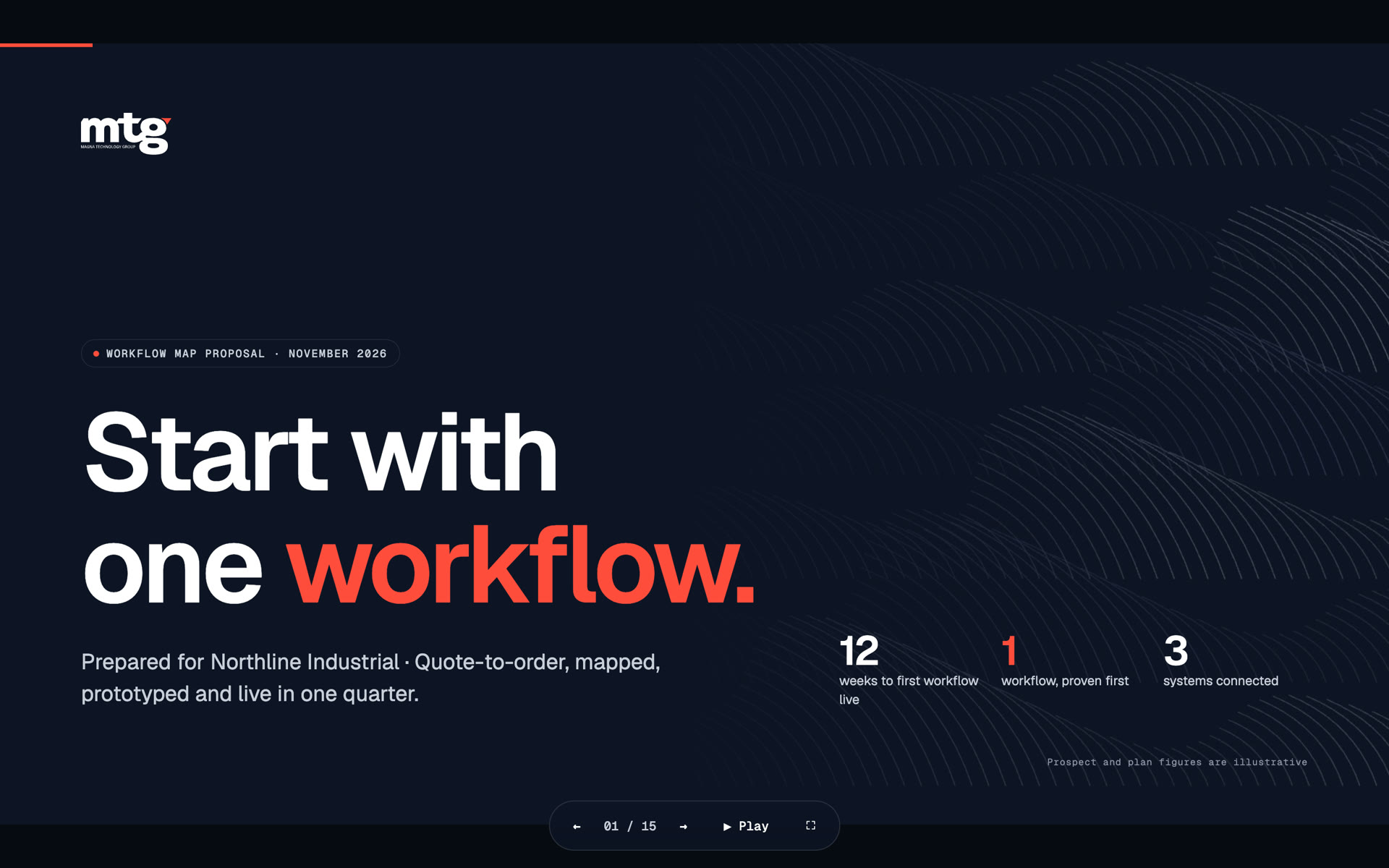
I made short videos of the tools. Hear me explain them, then scroll through every one at work. Real tools, on a real brand.
A stock background is a ready image others can use too. A brand pattern is drawn from your own logo or identity.
No. They are fine for one-offs and photos. For weekly posts, a brand pattern builds recognition.
You can, but it may still look like others' work. Use it for a one-off, not as your signature.
A designer can draw one from your logo. After that, the team can make new backgrounds from it every day.
Yes. It is a simple way to look consistent, because it repeats on every post.
Death List Five. Five headaches, one portal. Sound on.
See what ChatGPT says about your company, and how to fix it.
You hear from me within 2 to 8 hours.
May I use cookies for Google Analytics and Clarity to see which pages help? Privacy