 Hrvatski
Step 1
Pick one buyer
The person who feels the problem most and can say yes.
A good positioning statement names one buyer, one problem and one real alternative. Here are ten to learn from.
A B2B positioning statement says who you serve, the problem you solve, what you are and why you are different from the real alternative. The classic form is: For [buyer] who [problem], [company] is the [category] that [benefit]. Unlike [alternative], we [proof].
Below are ten examples for made-up tech companies, weak and strong versions side by side, and a checklist to test your own.
 By Vedran Obradović · Updated 4 November 2026
This form goes back to Geoffrey Moore's book Crossing the Chasm. It is still the clearest way to start.
For [one buyer: role and company type]
who [the problem, in their words],
[company] is the [category they already understand]
that [the main benefit].
Unlike [the real alternative they consider, even "a spreadsheet" or "doing nothing"],
we [the proof of the difference].
This statement is for you and your team, not for the homepage. The homepage line comes from it. See brand positioning for SaaS.
All ten companies are made up. The patterns are real.
| Made-up company | Market | Positioning statement |
|---|---|---|
| Hushwall | Security | For lone IT leads who drown in alerts, Hushwall is the security service that shows only the alerts that matter. Unlike a big SOC contract, it fits a team of one. |
| Rotafern | HR tech | For shift-based companies who plan rotas in spreadsheets, Rotafern is the scheduling tool that fills gaps in minutes. Unlike general HR suites, it is built around shifts. |
| Closewren | Fintech | For finance teams at fast-growing SaaS companies who close the month by hand, Closewren is the close tool that finishes in two days. Unlike an ERP add-on, it sets up in a week. |
| Crateowl | Logistics | For freight forwarders who chase updates by email, Crateowl is the tracking platform that shows every container in one view. Unlike carrier portals, it covers all carriers. |
| Featherstack | AI | For product teams who want AI features without a research team, Featherstack is the AI platform that ships a working feature in a sprint. Unlike raw model APIs, it comes with tests and guardrails. |
| Fibrelark | Telecom | For towns that cannot get fast internet, Fibrelark is the network builder that brings fibre to small places. Unlike national carriers, it builds where they will not. |
| Docsprout | Dev tools | For API teams whose docs are always out of date, Docsprout is the docs tool that updates from the code. Unlike wiki pages, it can never fall behind. |
| Pebblecare | Health tech | For small clinics who lose patients between visits, Pebblecare is the follow-up tool that books the next visit for them. Unlike a full practice system, it adds to what they have. |
| Peakowl | Energy | For factory managers who get surprise power bills, Peakowl is the energy monitor that warns before the peak. Unlike yearly audits, it watches every hour. |
| Shortlark | Recruiting | For hiring managers who wait weeks for a shortlist, Shortlark is the recruiting service that sends five checked people in five days. Unlike job boards, every person is interviewed first. |
All companies, numbers and claims in this table are made up to show the pattern.
Free tool
Paste your line. See it next to your competitors and what to fix. It is free and runs right here.
Most weak statements fail in the same four places.
| Part | Weak | Strong |
|---|---|---|
| Buyer | Businesses of all sizes | Lone IT leads at companies with 50-300 people |
| Problem | Need better security | Drown in alerts and miss the ones that matter |
| Benefit | An innovative, all-in-one platform | Shows only the alerts that matter |
| Alternative | Unlike outdated legacy tools | Unlike a big SOC contract |
| Proof | Best-in-class technology | A fact with a number and a source |
Name the alternative your buyer really considers. "Outdated legacy tools" is nobody. A spreadsheet, a big agency or doing nothing is real.
Leave your email. I design them by hand and send them to you within 48 hours. It costs you nothing.
I write to you from [email protected]. If you do not see it, check spam.
Step 1
The person who feels the problem most and can say yes.
Step 2
Copy the problem from a real call or email.
Step 3
What they would do if you did not exist.
Step 4
One fact that makes the difference true.
Need the whole strategy around it? Use the free brand strategy template or these Claude prompts for brand strategy.
Tick what is true today. Your ticks stay on this device.
0 of 8 done
The statement is the root. These lines grow from it.
Brand OS Core Portal. The CEO writes and designs an on-brand LinkedIn post in about 3 minutes.
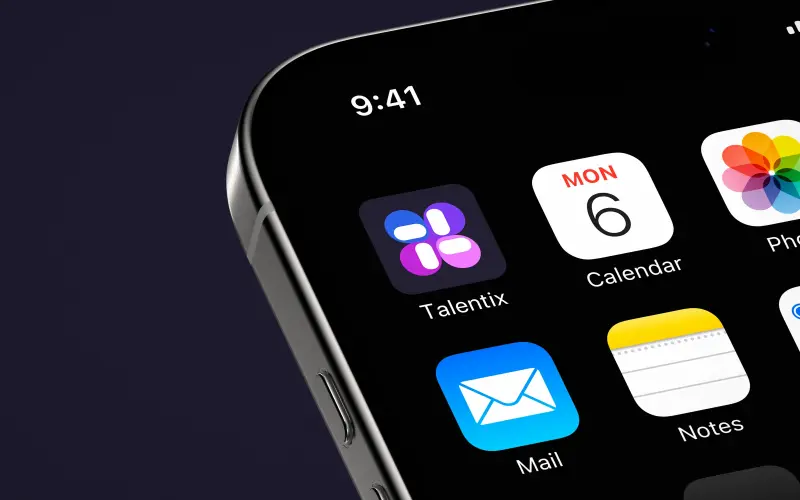
Guidelines with real rules: clear space, variations, monochrome, what not to do, colour pairing and type.
Want help with yours? I do brand strategy for B2B tech. More on the whole field in B2B tech branding.
Try one Brand OS Portal tool
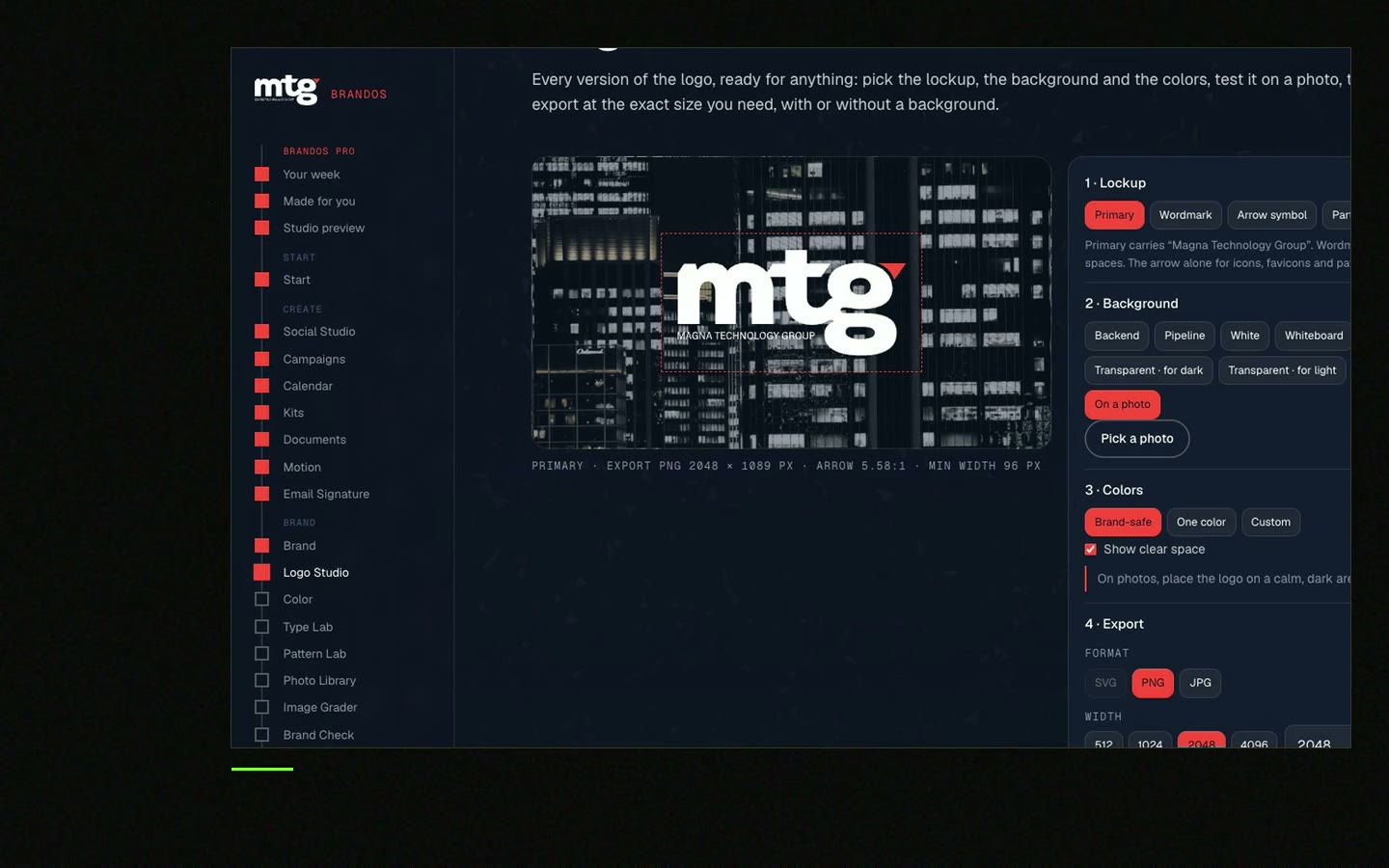
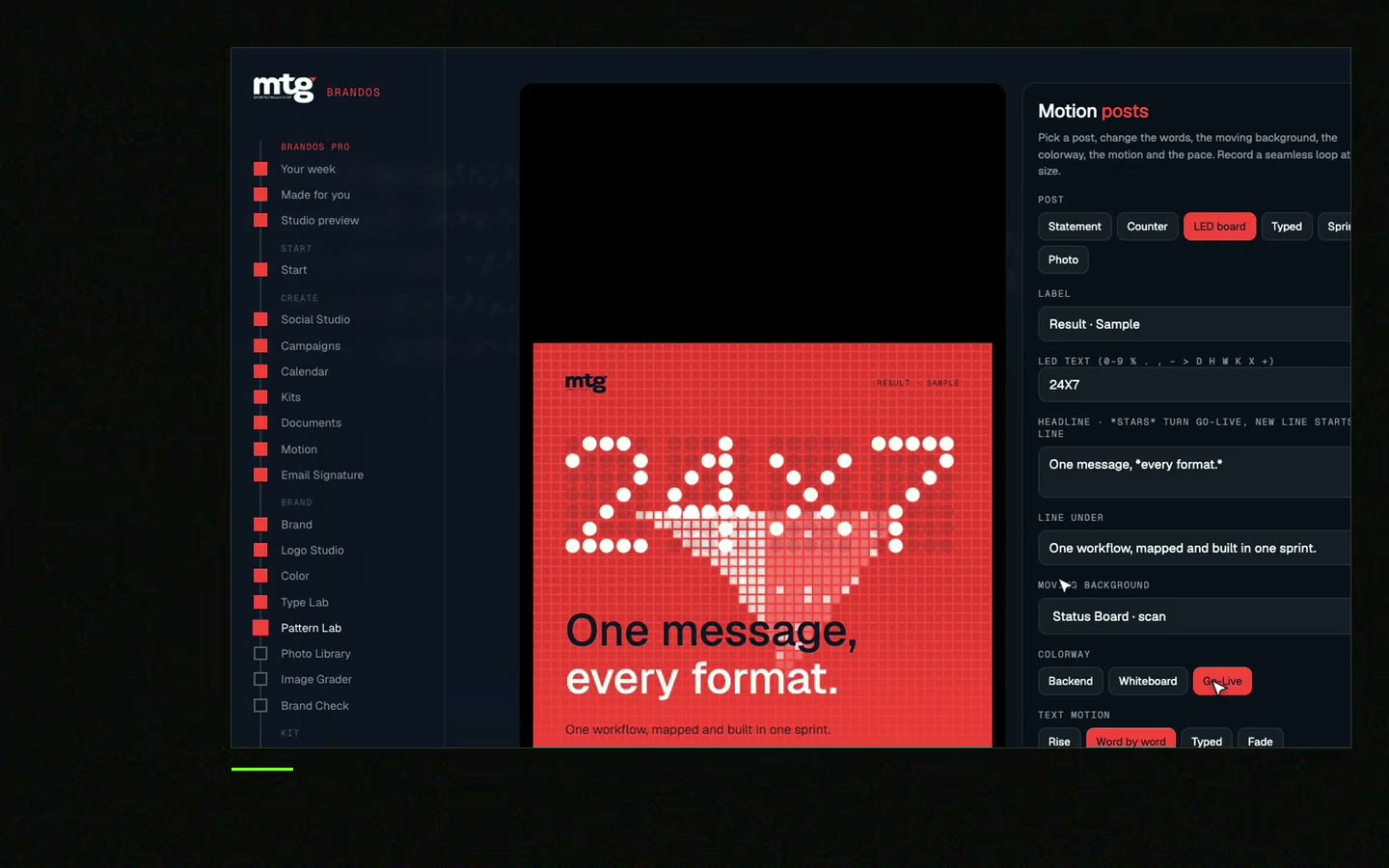
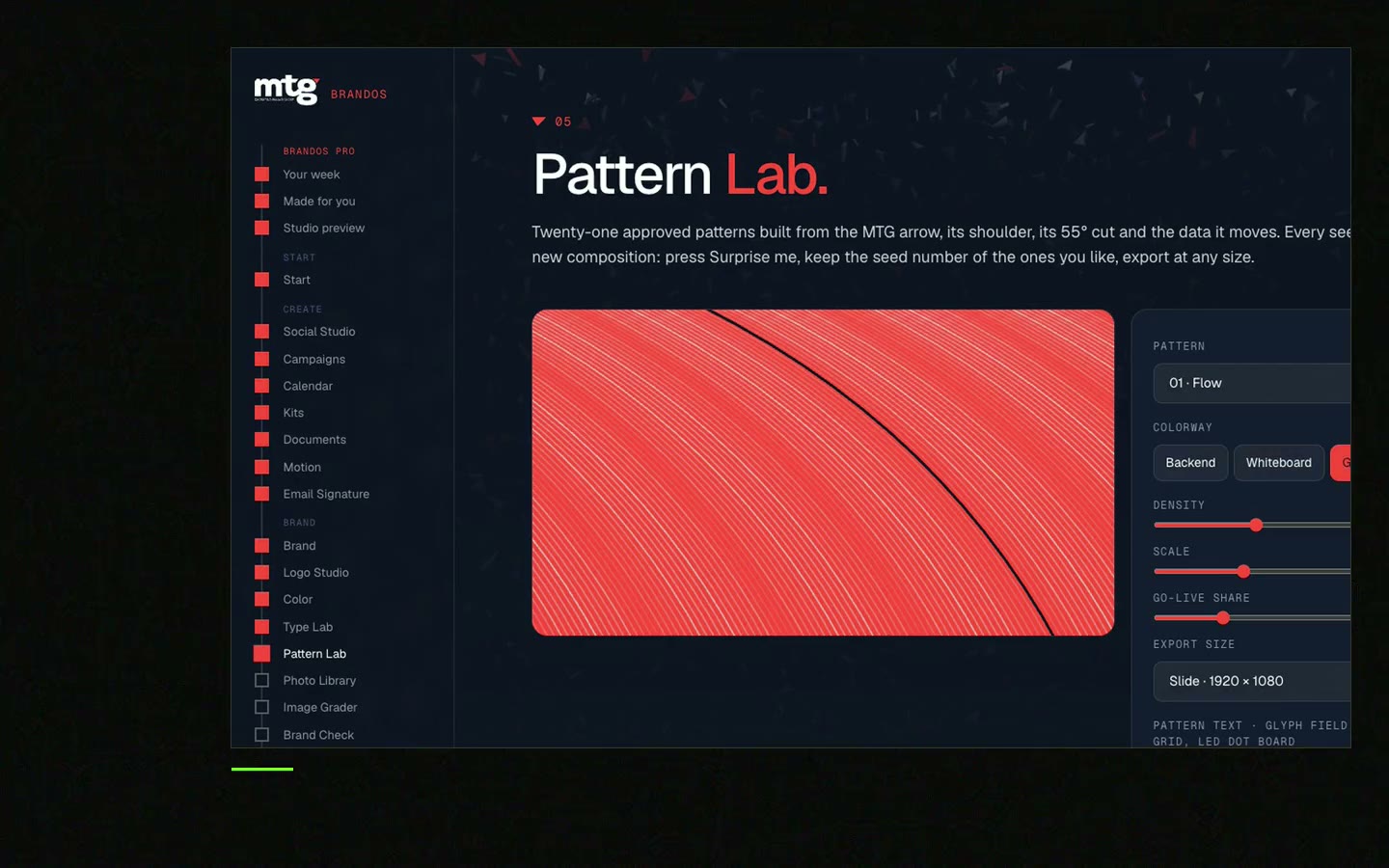
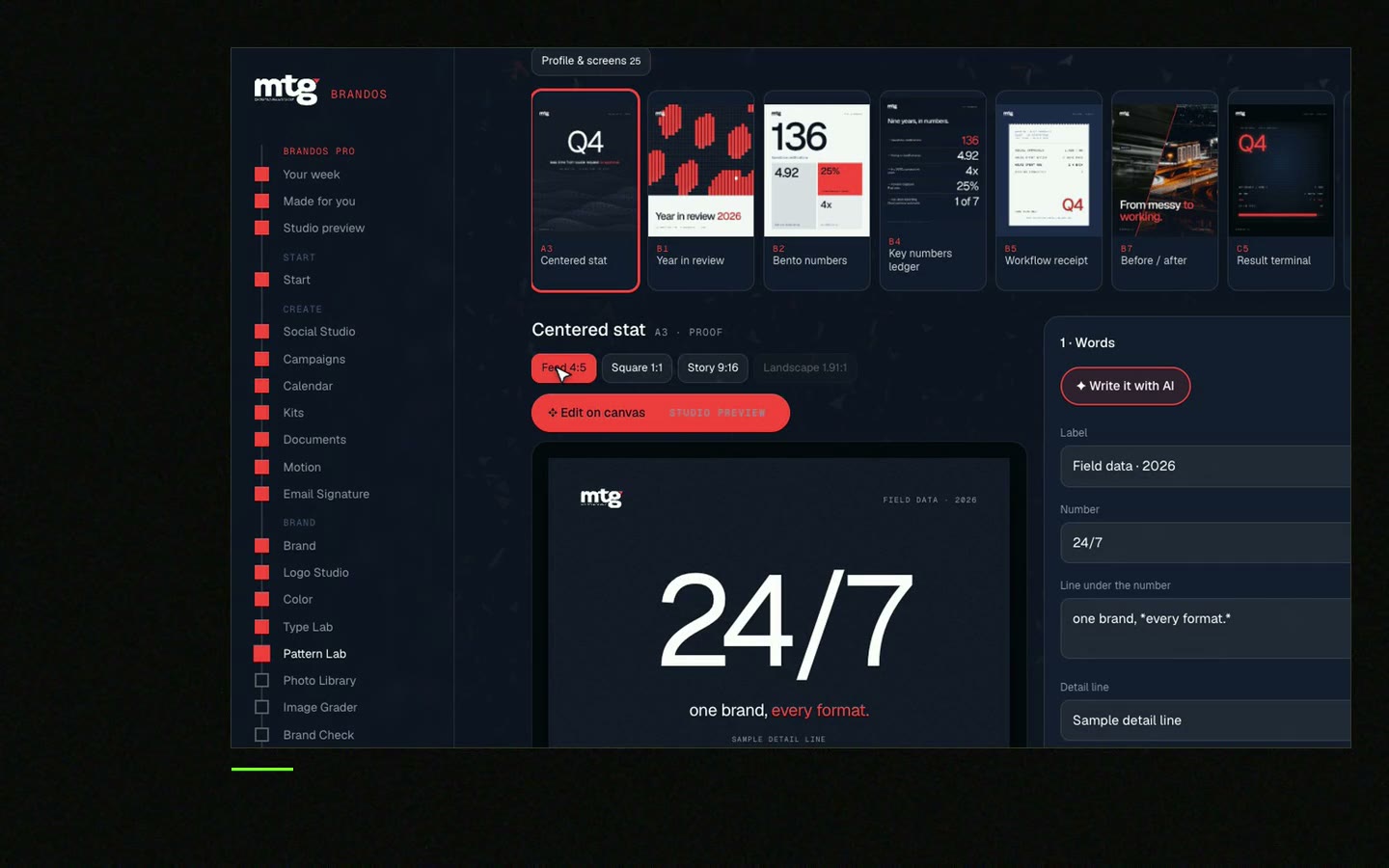
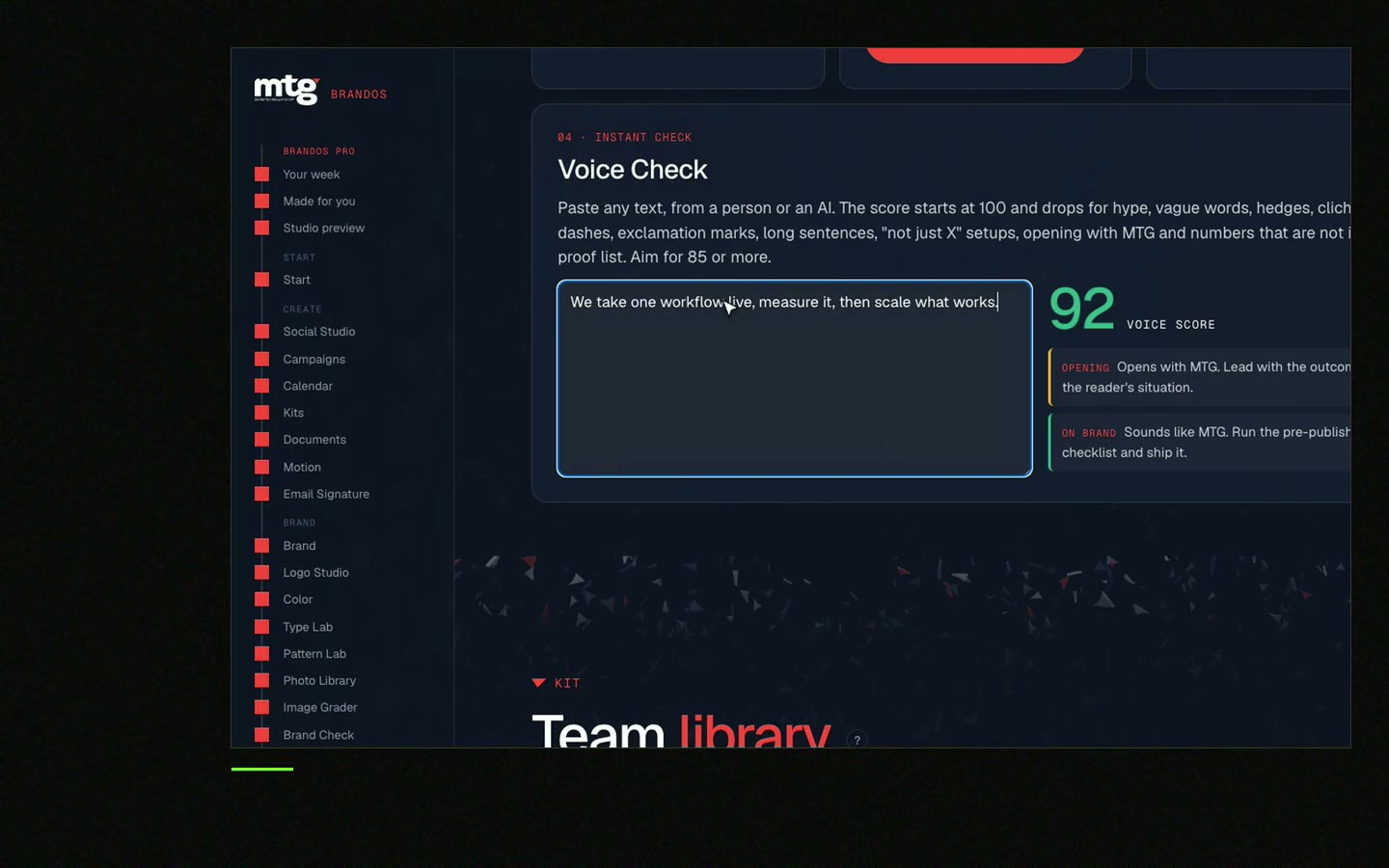
This is a real tool from a real Brand OS Portal, on the MTG brand. Type a line from your position. The design and the rules stay right.
A short internal statement that says who you serve, the problem, what you are and why you are different from the real alternative.
The positioning statement is for your team and guides every message. A value proposition is a buyer-facing promise, often on the homepage, that comes from it.
Two or three sentences. If it needs a paragraph, it is not decided yet.
Not word for word. Use it to write the headline, the first lines and the About text.
It comes from Geoffrey Moore's book Crossing the Chasm and is widely used by B2B and software teams.
"He is a brand magician; he understood the challenge quickly and delivered a brand identity, complete with motion graphics, messaging, etc."
 Leah MarsdenCMO, MTG

"It was never really about creating one logo. It was about building something strong enough to grow with the company."
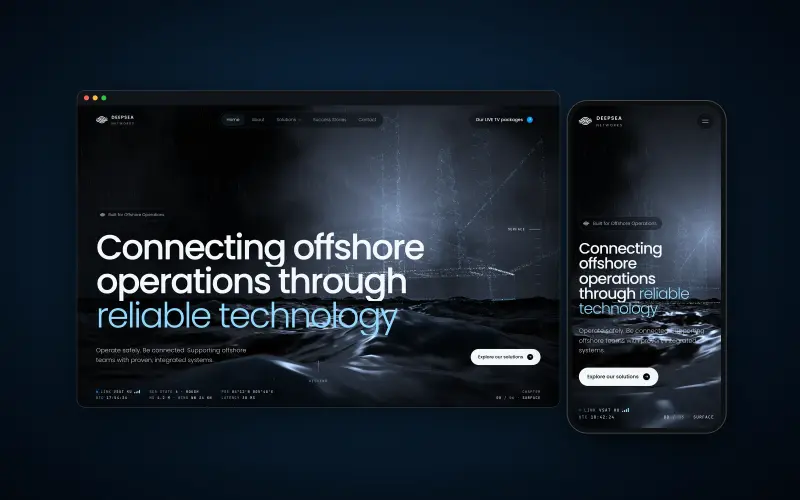
 Pierre-Marc NoëlFounder & CEO, Deepsea Networks
"The brand looks premium and actually fits an AI / tech company, and the guidelines are so clear our team just uses them without asking questions."
 Jeremy MurrayFounder, KORDIN and Stack8s

Get your brand score and the first thing to fix.
You hear from me within 2 to 8 hours.
May I use cookies for Google Analytics and Clarity to see which pages help? Privacy